Science Topics beginning with ‘E’:
Ecosystem:
Ecosystem
An ecosystem (or ecological system) is a system formed by organisms in interaction with their environment.
Energy:
Conservation of Energy
In classical physics there are four conservation laws:
- Conservation of Momentum
- Conservation of Energy
- Conservation of Angular Momentum
- Conservation of Charge
For conservation laws of systems within modern physics, reference should also be made to Noether’s Theorem.
Noether’s Theorem
For conservation laws beyond classical physics and particles it is necessary to consider symmetries. The mathematician Amalie (Emmy) Noether proved her theorem relating conservation laws to symmetries in 1915 and published it in 1918.
Quoting from the Wikipedia article:
‘Noether’s theorem is used in theoretical physics and the calculus of variations. It reveals the fundamental relation between the symmetries of a physical system and the conservation laws. It also made modern theoretical physicists much more focused on symmetries of physical systems’.
‘ Noether’s theorem can be stated informally:
‘If a system has a continuous symmetry property, then there are corresponding quantities whose values are conserved in time.[7]‘
(The citation note [7], above, links to: https://books.google.com/books?id=O25fXV4z0B0C&pg=PA5 )
Exoplanets:
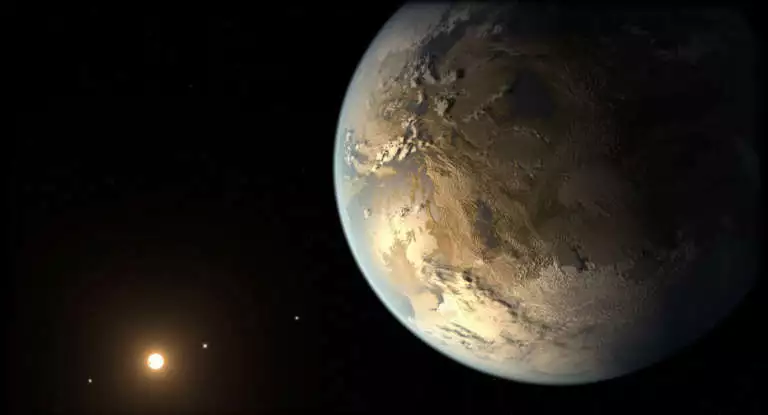
Exoplanets
An exoplanet is any planet beyond our solar system. Most of them orbit other stars, but some free-floating exoplanets, called rogue planets, are untethered to any star.
Experiment:
Science Experiments
[Blog Reference ST: PT-B1-C1_220512.]
Modern science relies upon objective observation of the natural world and repeatable experiments to verify theories that describe our Universe and its laws of physics. Thus experiments are an essential tool to enable us to understand the true nature the world. Engineers also use experiments and tests to check their designs and ensure that equipment and products meet design criteria and industry quality standards.
(Updated: 27/11/25).