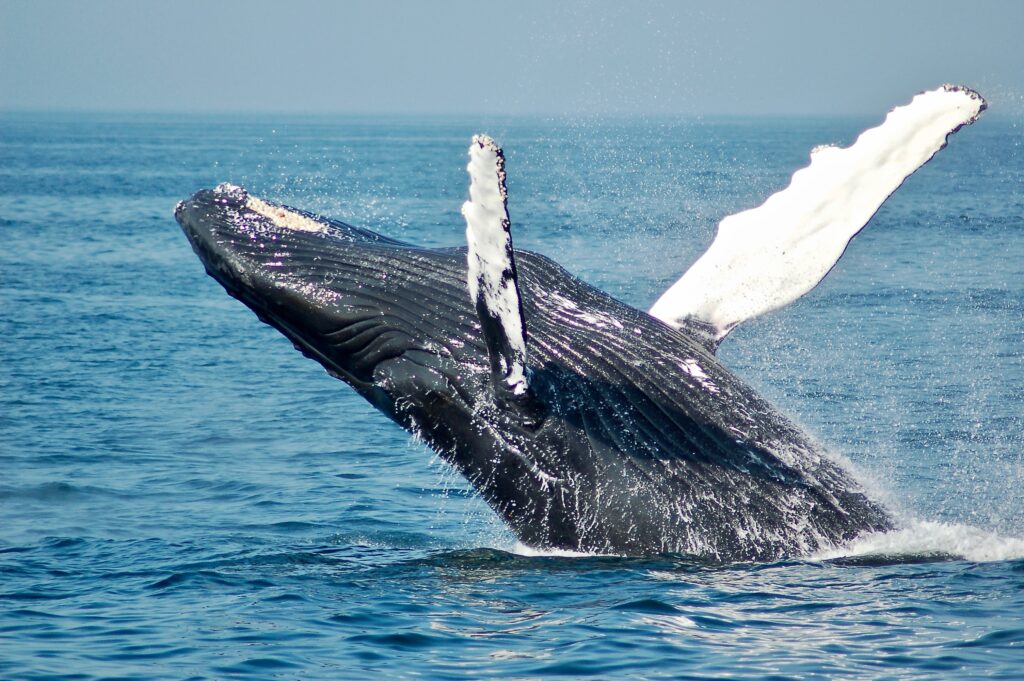
Biodiversity – Variety of Life
This Blog post, ‘Biodiversity – Variety of Life’. It follows our first post of this series, Biodiversity – Concept.
This is Post #2 of our Biodiversity Series.
The Hidden Universe
This series is inspired by the book, “The Hidden Universe, Adventures in Biodiversity”, by Alexandre Antonelli, published in 2022 by The University of Chicago Press.
In the book, “The Hidden Universe, Adventures in Biodiversity”, by Alexandre Antonelli, the components of Earth’s biodiversity are described as ‘far more abundant, numerous, complex and interwoven than most people realize.’
Setting the Scene: Two Universes
Antonelli explains in the first chapter of his book, ‘Setting the Scene: Two Universes’, that our ‘ancestors began to explore biodiversity very early in our evolutionary history‘ (i.e. hundreds of thousands of years ago). They ‘were guided by their most basic needs of food, shelter and comfort’.
Our Ancestors
Our ancestors subsequently migrated from Africa into, and across, the other continents of Earth where they encountered even more biodiversity. Even early humanity itself has been subject to the biodiversity aspect of evolution. For example, Antonelli refers to the subspecies Homo floresiensis which evolved due to natural selected favouring small individuals on the island of Flores. This island is now part of modern day Indonesia.
Variety Of Species
Antonelli gives other examples and other detail which all provide an excellent, and very readable, introduction to the later chapters of his book.
Included in this detail are references to archaeological evidence, ancient and more recent human records, and the work of early naturalists, including Charles Darwin.
Antonelli discusses the number and wide varieties of species. He points out that the actual number of species is unknown but conservatively estimated to be at least 8.7 million, but he tells us that even this estimated number does not include ‘significant and substantial portion of all diversity: bacteria and Archaea’.
He goes on to say that if you include these last two groups, ‘serious calculations suggest that a trillion (!) species may in fact share this planet’.
DNA
Antonelli then discusses the DNA record. He gives an example of a research scientist discovering in an equivalent of a single teaspoon of Amazon soil 1,800 ‘genetic species’. Of these about 400 were fungi. He also tells us that ‘more than 150,000 fungal species have been described, while at least 3 million are estimated to exist’.
You may now understand, if you didn’t already, what Antonelli means by the ‘Hidden Universe’! He explains it in much more detail in his book.
Diversity of Co-inhabiting Species within our Bodies
Antonelli then references the huge diversity of co-inhabiting bacteria that live on and in our human body: ‘healthy individuals are home to over ten thousand species of microbes’. That is not the number of microbes, it is the number of different species of microbes, that live on our skin, hair or in our cavities and gut! These include: bacteria, archaea, fungi, and viruses.
‘In our gut alone. our co-inhabiting bacteria host over two million different genes, which is 100 times more than in our own DNA’.
A very significant aspect of this fact is that ‘this human ecosystem, our microbiome, provides numerous but scarcely known functions, strongly influencing our physical and mental health, our immune, endocrine and nervous systems’.
Earth’s Biosphere in Peril
Finally in his first chapter of his book, Antonelli discusses the threats to the Earth’s biodiversity which in turn threaten life on our planet. This is the most important part of this chapter and prepares us for the subsequent chapters.
Best to Read His Book
Antonelli’s book contains many gems of information, only a few of which are mentioned in these posts. I strongly recommend that you read his book for yourself. These posts are a very poor summary of, or window into, his very eloquently presented story of Biodiversity, Hidden Universe. His book is very easy to read. It is a must read if you are at all interested in the welfare our planet and the future of humanity within its biosphere.
Poses Questions For Future Space Colonization
Antonelli’s book, by inference, poses both interesting and serious questions as to the merit, and in fact feasibility, of humanity’s ability to successfully colonize other planets. Our current ability to provide an ecosystem whose complexity is sufficient for a satisfactory habitat is very seriously in question.
For example, to provide on Mars such a habitat within which humans could survive indefinitely requires first to adequately understand the complete biological and ecosystem requirements for such a habitat. It is one thing to be able to travel to Mars, but then to live and survive there indefinitely is a completely other thing.
The Earth’s Biosphere is Extremely Diverse and Complex
Life on Earth is several orders of magnitude more complex than any human technology existing today or expected to exist in the foreseeable future.
It is much easier to preserve our Earth’s biosphere than to ever create a new biosphere on another, presently lifeless, planet.
The unforeseen biological consequences of trying to live in a limited artificial human habitat with several orders of magnitude less biodiversity than on Earth, would suggest a very short life for any colony that tried to exist independently of Earth.
Our Next Post
In our next post, #3 of our Biodiversity series, we shall look into Chapter 1 of Part One of Antonelli’s book. Part One is entitled, “Biodiversity: More Than Meets the Eye’, and its Chapter 1 is titled, ‘Species’.
Questions
If you have any comments or questions concerning this post, ‘Biodiversity – Variety of Life’, or in fact the series of posts, ‘Biodiversity’ (or anything else), please leave your comments below. (You will need to be registered onto our site).
We look forward to hearing from you.
(Updated: 15/12/2025)